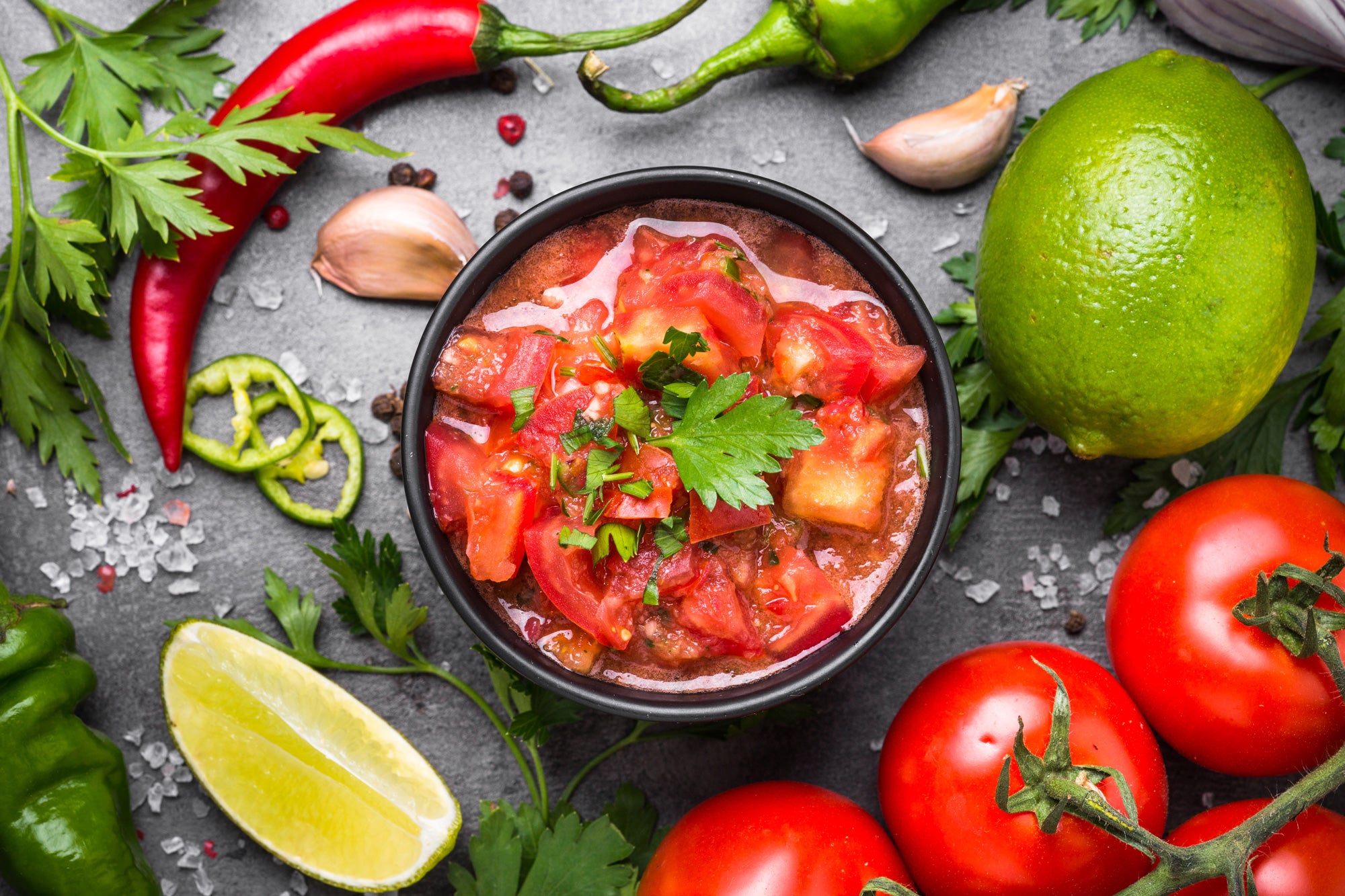

Hot Sauces are made from lots of ingredients beyond just hot peppers! Many recipes include fruit, juice (lime, lemon), different types of vinegar, ginger, mustard seeds, carrots, garlic, onions and other ingredients to add more flavor and thicken or extend sauces.

It's fun to grow many of your own hot sauce ingredients in your garden for the freshest flavors. Hot sauce is a great way to preserve your harvest for year-round use. Grow your own Hot Sauce Garden and make your own hot sauce to share with family and friends.
People craft and mix and match various ingredients to create exceptional hot sauces. Some people are purists, and use only peppers, distilled water and sea salt and time (fermented Tabasco-style). We think all hot sauces have their place – and it's really fun to try different ones and rotate them out as the seasons progress and ingredients become ripe or available. We have about 12 rotating bottles of hot sauce at any given time in our fridge, some are great for eggs (tabasco or louisiana style hot sauces, or green hot sauces), while others are great for asian noodle dishes (chili garlic sauce, Sriracha), while tomatillo hot sauces are good on everything.

The first ingredient for hot sauces is, of course, Peppers!
You can use any peppers for hot sauce, ranging from sweet peppers to super hot peppers and everything in between. We like to grow a variety of peppers and often mix them to make flavorful hot sauces. Often, Hatch chiles make a great base for hot sauces as they offer a ton of flavor, heat and body to hot sauces. Habaneros are one of our all-time favorites for hot sauce. Be sure to try growing lots of peppers and see which ones you like best for hot sauce. Check out our list of the Best Peppers for Hot Sauce.

Favorite ingredients (besides hot peppers) for hot sauce:
- Carrots: add flavor, color and thicken sauces.
- Onion: for flavor, and to thicken the hot sauce, green onions can add flavor and color.
- Garlic: a classic taste-boosting magical ingredient for hot sauces. Some people even use Black Garlic!
- Garlic Chives: excellent ingredient for Asian-style hot sauces, offering a mild garlic-onion flavor that pairs well with heat without overwhelming other ingredients.
- Shallots: add savory depth and complexity, and thicken sauces.
- Smoke: many people grill or smoke their peppers & other ingredients to add depth of flavor.
- Ginger: adds a bright, zesty, and aromatic warmth to hot sauces.
- Cumin: adds earthy, smoky, and savory flavor.
- Coriander: the crushed seeds of cilantro add great earthy flavor to hot sauces
- Mustard: seeds and powders add some “up your nose” heat and tons of flavor.
- Cilantro: often added to green hot sauces, it adds nice color and a wonderfully bright, fresh, and citrusy, slightly peppery herbal note.
- Rhubarb: for tartness and color, and to thicken.
- Beets: for their deep color, sweet earthy flavors, and body.
- Radishes: for their spicy pungent heat & flavor.
- Horseradish: adds pungent flavor and thickens hot sauces.
- Basil: pairs well with Italian-inspired, green, or fruit-based sauces.
- Tomatoes: of course go perfectly with peppers, use a variety of different colored heirlooms for their depth of flavor, color, and thickening qualities.
- Vinegar: Try a variety of different kinds, including: Rice Vinegar, White Vinegar, Apple Cider Vinegar, Balsamic Vinegar, Red Wine Vinegar, White Wine Vinegar
- Fruit: apples, pears, berries, mango, pineapple
- Coconut milk: for white hot sauces, pairs with tropical peppers like Habaneros Fish Peppers, or Thai chilies, along with lime and garlic for balance.

What ingredients go into hot sauce?
It depends! A classic hot sauce has only peppers, salt, and distilled water. Many hot sauce makers use brine fermentation and time to develop the flavors. Vinegar is often added to the finished product, but depends on your recipe and tastes!
The Tabasco hot sauce brand is an example of a simple fermented hot sauce that adds vinegar at the end – they use fermentation and time to develop the complex flavors with two simple ingredients. First, they make a pepper mash with Tabasco peppers and salt, which is then aged (fermented) in white oak barrels for up to three years. Finally, they blend the mash with vinegar for 28 days, strain out the skins and seeds, and bottle it for the world-known classic Tabasco sauce. Similarly, Louisiana hot sauce is also produced by fermenting chili peppers (often cayenne) with salt and aging them for a significant period (usually a year or more) before blending with vinegar.
But of course most people don't stop there with hot sauce ingredients. You'll find that every hot sauce company often has a variety of hot sauces in their lineup beyond a classic red hot sauce. As seen on the hot sauce ingredients list above, there are a ton of different tasty ingredients you can add to hot sauce to give them flavor, add depth, color, and to help thicken hot sauces. Many of these ingredients are also used when making fermented hot sauces which use salt and time to develop extra-tasty savory hot sauces.

Check out all of our favorite hot sauce recipes below – but don't stop there, experiement, add your own fresh ingredients, and have fun creating something all your own to share with your family and friends.
Favorite Hot Sauce Recipes:
Easy Hot Sauce »
Orange Habanero & Carrot Hot Sauce »
Fermentation Crock Hot Sauce Recipe »
Louisiana Hot Sauce Recipe »
Roasted Jalapeno Hot Sauce Recipe »
Easy Fermented Hot Sauce Recipes »
Chocolate, White, Yellow & Red Hot Sauce »
No-Salt Hot Sauce Recipe »
Carolina Reaper Hot Sauce Recipe »
Ghost Pepper Hot Sauce Recipe »
Homegrown Sriracha Sauce Recipe »
Chili-Garlic Sauce Recipe »
Chili Oil Recipe »
Sambal Oelek Recipe »
Tomatillo Hot Sauce Recipe »
Green Hot Sauce Recipes »
Hot Sauce from Dried Peppers »
Go probiotic with your hot sauce!
Find the best Fermented Hot Sauce Recipes »

What spices are good in hot sauce?
Some of our favorite spices for enhancing hot sauce include garlic powder, onion powder, cumin, black or white pepper, coriander, turmeric, mustard seeds, cinnamon, cloves, dried red chile powders, Aleppo powder, smoked paprika for depth. You can also use lime zest or dried herbs like oregano or thyme. And of course, salt is one of the mainstays of most hot sauces. If you're watching your sodium intake, you can also make a No-Salt Hot Sauce with vinegar, garlic and peppers.
Experiment and try all sorts of spices in your hot sauces – the sky is the limit!

Is Tabasco really just 3 ingredients?
Yep – Tabasco is made from just peppers, salt and vinegar! Most importantly, it takes time, but that doesn't really count as an ingredient. First, they make a pepper mash with Tabasco peppers and salt, which is then fermented (aged) in white oak barrels for up to three years. Finally, the mash is blended with vinegar for about a month, then they strain out the skins and seeds, and bottle it!
Many hot sauce makers go for extra simple and use just salt and peppers (and distilled water as needed for consistency) to make their hot sauces. Some people love vinegar in hot sauces while others like to keep it simple and clean and just use the flavors of the peppers for the main ingredient.

However you make it, hot sauce is a top-notch condiment and we think it's a great addition to nearly every meal. Check out all of our favorite hot sauce recipes »