
Can you plant seeds in January?
Yes, because for us gardeners, it's hard to resist waiting!
And there is no reason to wait.
That said, in most growing regions, starting seeds outside in January isn't realistic (at least without cover, read more about that lower below.) In growing regions with cold winters, in January the ground is often frozen or covered in snow, and ongoing frosts are imminent. But there are some cool weather veggies that can be started outdoors, or under cover, and you can start some summer vegetable seeds indoors to let them germinate and grow indoors until it's warm enough to plant them!
Many summer veggies like tomatoes should be started about 6-8 weeks prior to transplanting outdoors after all chance of frost has passed. So January is just too early in most areas for many large fast-growing vegetables like tomatoes, squash or beans. Some veggies don't like to be transplanted either – radishes*, cilantro*, squash, pumpkins, zucchini and carrots* are best directly seeded outside when the time is right.

Here's our list of the top vegetable seeds to plant in January:
Cabbage – Compact heads for slaws and sauerkraut. Start seeds early so they size up earlier in the season. You can also eat the young leaves and use them for stir fries and other recipes.
Broccoli – Spring staple that can provide nice heads come spring, so start them early. Then, after the first heads are ready, cut them off and side shoots will provide more heads all summer long.
Peppers (hot & sweet) – Heat lovers that germinate slowly and need very warm soil and extra time. Just make sure you’ve got enough space and extra light so they can keep growing strong until it’s time to transplant them. Pot them up if their roots start outgrowing their space.
Eggplant – Warmth-loving plants that sprout and grow slowly, so they appreciate an early indoor start. Just make sure you have room and supplemental lighting to allow them to grow as large as they can until transplanting time.
Green Onions / Scallions – Slim, zingy green onions that bring fresh flavor early in the season. Great for salsa recipes!
Lettuce – Crisp, fast greens that germinate in chilly soil for the first salads of the year. Germinated lettuce can tolerate freezing temperatures, but using frost cloth or a cold frame will speed their growth for an extra early spring harvest.
Peas – Sweet pods and shells that sprout in cool soil and reward you with early spring snacks. A little cover will help them greatly in the shortest days of January!
Spinach – Cold-tolerant leaves that need an early start so they finish before sudden spring heat. Spinach is one of the most cold-tolerant vegetables, but a little cover will help it grow much faster in the short, cold days of January and February.
Cilantro – This is a cold tolerant herb that actually likes the cooler temperatures of late winter and early spring. Sow seeds now and they'll sprout when ready so you'll have a nice early spring harvest of cilantro to use for salsas, tacos and more.
 Cilantro does surprisingly well in early spring when seeds are planted outside in January!

Indoor Seed Starting in January
Of course, if you have the room and good lighting, you can start a lot of veggies like peppers, basil, lettuce, parsley, oregano, or spinach indoors now in January! Just make sure to pot up larger plants like peppers to larger containers as they fill out their pots, the more roots the better!

Peppers are actually perennial plants, so you can grow most varieties for many years to provide years of harvests, as long as they are protected from frost. Many people start pepper seeds indoors and grow pepper plants year-round under lights in the winter months, and move them outside in the summer months.
Tomato seeds germinate and grow FAST - so it's likely best to wait unless you have a lot of growing room, are able to pot them into larger pots, and provide bright supplemental lights. Because they are fast growing, we usually wait to start tomato seeds until about 4-6 weeks before transplanting outside, but pepper seeds, especially super hot pepper seeds can be started much earlier as they take their sweet ol' time to germinate and grow slowly at first.

*Planting seeds in January outdoors:
We are also planting seeds for Cabbage, Radishes, Lettuces, Beets, Cilantro, Carrots, Spinach, Green Onions, Parsley, and other cool-weather veggies outside in our cold frame or hoop house in January. These structures do not need any added heat, as they use the power of the sun, and cool weather veggies don't mind the cool temperatures when they are provided with some cover. They'll germinate when the conditions are right, and the trapped solar heat of a cold frame or small hoop house helps warm the soil and gets them going a lot sooner.

A little cover (such as a cold frame or hoop house) goes a long way to helping cool-weather vegetables germinate and grow outdoors this time of year here in the West. Just make sure to vent it on warm sunny winter days or you'll cook your seedlings! You can even use an overturned clear saucer and start spinach or lettuce seeds under it with great success in the winter months!
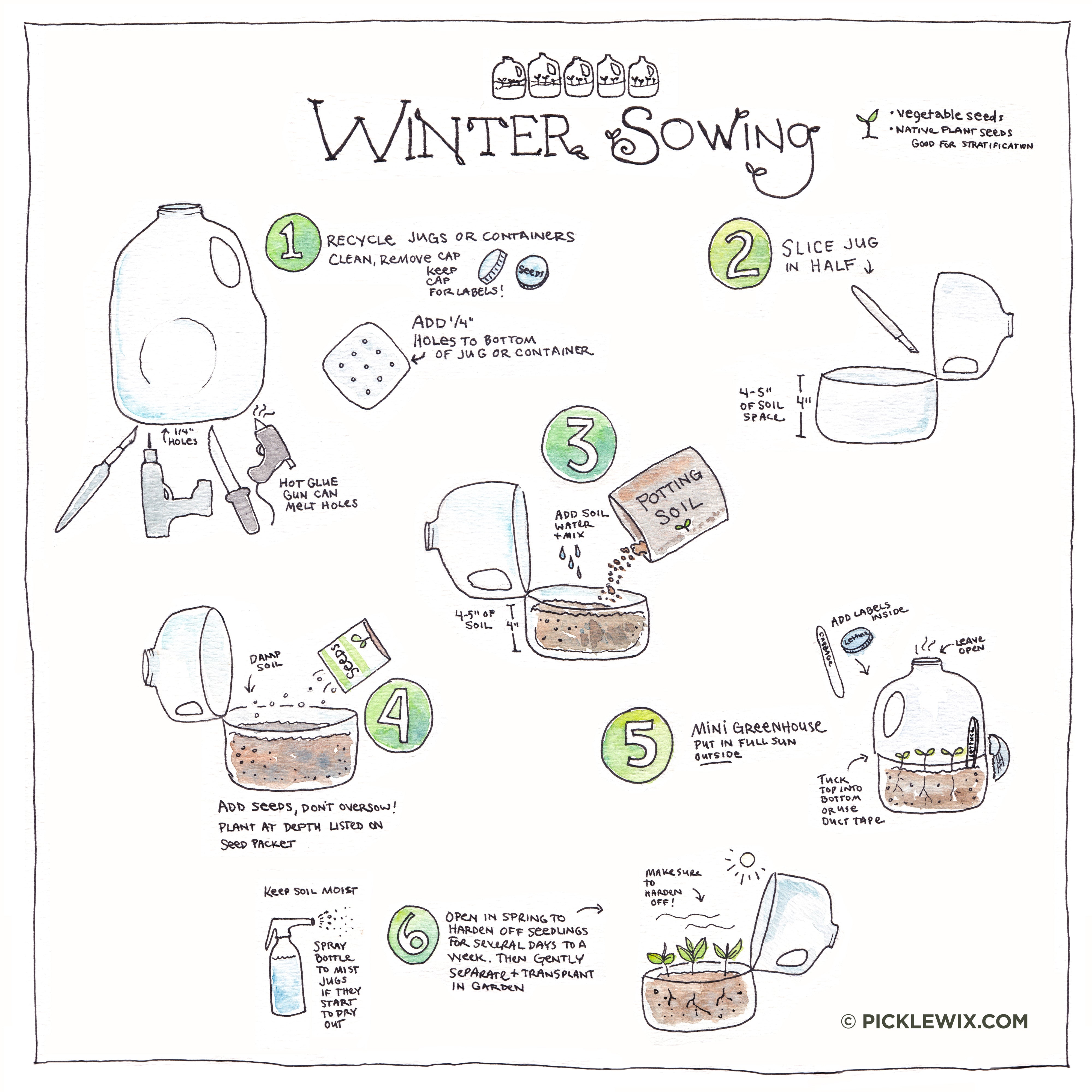
Winter Sowing is also a great way to start cool-weather loving seeds outdoors now. These little "greenhouses" don't need any added heat to start many cool-weather veggies this time of year. It's a great technique if you don't have much space indoors to start seeds. Read more about it in our Winter Sowing blog post.  Above: Lettuce seeds germinate easily outside with a little cover in January.
So don't wait until spring to start planting seeds, start seeds now and extend your harvest season and bounty by growing year-round!
Happy growing!