
How to Prune Pepper Plants for Maximum Yield
When growing peppers from seed, you want to make sure you get the maximum yield from your plants. There are many theories on how to prune peppers for the highest yield. We've tried multiple ways of pruning such as topping pepper plants, but we haven't found that topped plants have necessarily produced more peppers than their un-topped counterparts.
In fact, in short seasons, it seemed to just put off the harvest a little longer as the plants had to put on more growth to catch up to their un-topped cousins. If you live in a long season gardening area, topping could help, but we really haven't seen much difference in all of our experiments! We've tried it both ways for several years, and the plants, when planted in full sun, seemed to do equally well whether they were topped or not.
Sometimes it's good to prune away lower leaves that may be getting in the dirt or, if you're in a windy area sometimes top-pruning pepper plants can help keep the plants more compact and wind-resistant.
You may also want to prune peppers if they are planted too closely and are inhibiting air circulation if you are having problems with disease or pests. 
A few things we DO encourage:
1. Pinch your Pepper Plants' first Blossoms:
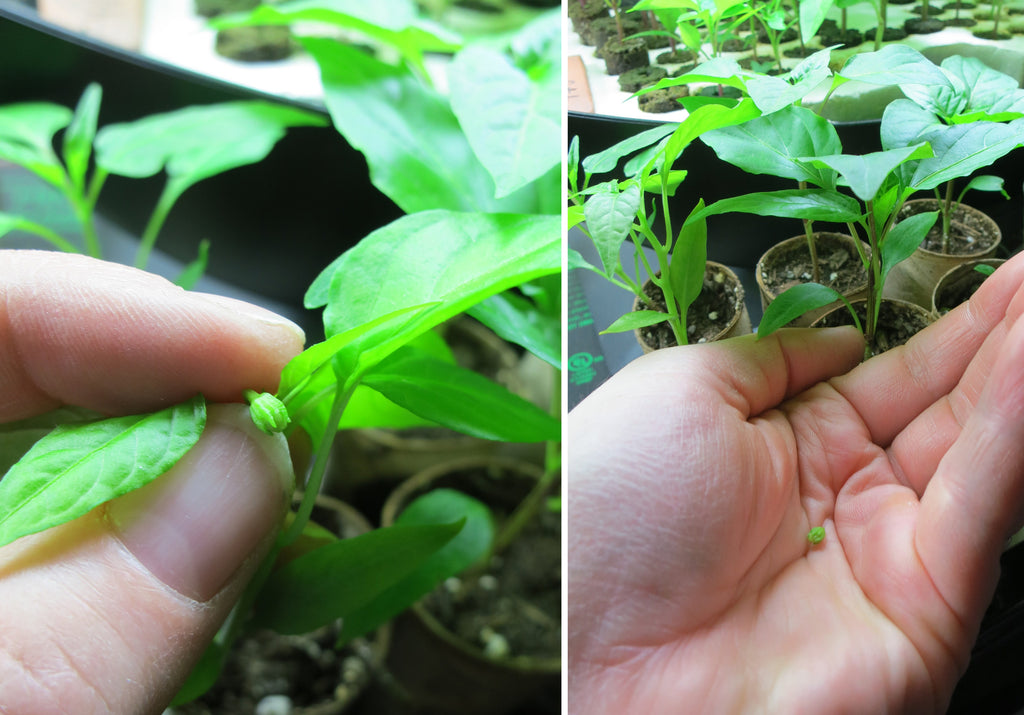
We always pinch our pepper plants' first blooms to get the plants to put more energy into growing larger rather than into a few first pods. This is especially good to do prior to transplanting, as the plants will put more energy into their roots and growing rather than producing fruit. This also works on tomatoes, eggplants, and many other vegetables. Some people don't bother with pinching the first blossoms, and, not all seedlings have blossoms early on – but we find it is helpful when young seedlings are blooming early indoors, to pinch the flowers off to give the plants a chance to grow larger before focusing on reproducing.
2. Space out your Peppers
We also recommend one pepper plant per pot when in the seedling stage. Sometimes we'll gently "pluck" out the extra seedlings when very young and transplant them into their own pot or pod. Peppers won't be as productive if too crowded. Peppers should be planted 16-24" apart for maximum growth and yield.

That said, if you're peppers are prone to sunscald because you live in a hot climate with intense sun like in a high altitude region, planting peppers a little closer together can help them provide a little side-shade to each other to prevent peppers from getting sunburned. We also like to companion plant peppers with bush beans or cow peas to help shade and feed the soil, and provide side-shade for the pepper plants. Basil also makes a great companion plants in the garden or in pots. Planting peppers in pots can be helpful as you can adjust their spacing over time to accommodate their growth.

These two pepper plants pictured above are really too close, and should ideally be divided when transplanting. Pinching off any blooms that appear before transplanting will encourage them to put all their energy into growing, resulting in larger plants with more peppers later in the season.
Don't keep a few first blooms just to try to get the earliest pepper, as the plants will put more energy into developing the fruit (reproducing) rather than growing to their lushy potential. 
These pepper seedlings above, while pretty with their flowers, should be pinched before transplanting. In fact, do you see that baby pepper in there? This pod will stunt the plant as it will focus it's energy on developing the pepper pod instead of growing roots and new leaves when transplanted. These seedlings also look a bit overwatered, note the yellowing of the leaves. Make sure your pepper seedlings are NEVER soggy!
 We won't be pruning this Moruga Scorpion plant, who looks perfectly happy untopped and unpruned. If leaves are touching the soil, we may pinch them off to help prevent disease and pest damage.
PICK YOUR PEPPERS!
Pruning off the pods (a.k.a harvesting) regularly is also important to keep pepper plants producing more fruit. Once the peppers are of the right ripeness, harvest them! You don't have to wait until the fully mature to their final color, though they can taste better once fully ripened – as we mentioned earlier, many peppers like Hatch Chile and Jalapenos will eventually turn red, but are still very tasty when picked green once they've reached their full size. We've even picked Carolina Reapers at the end of the season before a frost when they were still green, and, if they are close enough to ripening, they would turn on the countertop. Plus, the green Reapers still packed a whallop of heat and flavor, so none go to waste! The green super hots make a mean green hot sauce when combined with tomatillos and cilantro. Harvesting your peppers regularly over the season will encourage the plant to keep producing more pods over time.
Conclusion:
Should you prune pepper plants for maximum yield?
Whether you choose to prune your pepper plants or not, we think for maximum yield you should pinch off the first blossoms before transplanting your pepper plants (or even if they're direct seeded in their location, pinch off the first few blooms to encourage more growth). We don't find that topping or pruning peppers necessarily increases your yield, but pinching blossoms will definitely help increase the production of pods on the plants.
A couple other tips for maximum pepper harvests from your pepper plants:
• Make sure they have lots of space and full sun. The more sun, the more peppers. If peppers are shaded by other plants, they will be stunted.
• Don't over water peppers, let the soil dry out between waterings, and make sure their soil is well-draining.
• Grow them in full sun - is they are in shade they won't produce as many peppers. That said, in really hot climates or weather, peppers don't mind some dappled shade for part of the day. Opt for about 6-8 hours of full sun.
• Pick your peppers to encourage more to come!

Happy growing! Make sure to check out our How to Grow Peppers page for lots more pepper growing tips.
~ Sandia Seed


The huge chile pepper harvest above is from one of our chile seed customers in Sheridan, Wyoming. She has an amazing chile garden and shares her amazing Chile harvests with friends.
“I hope that you get these photos. I started your Heritage Big Jim seed in a sunshed in mid March, planted around 600 to the garden! As you see, we made quite a haul! I do have a small chile roaster and many chile loving friends! We really love the flavor of these Jims. I will be ordering from you again! Thanks.”
~ Janette of Sheridan, Wyoming
This massive harvest of green chiles were grown from our Big Jim Heritage Green Chile Seeds, Big Jims are notorious for growing super large pods up to 12" in length, with thick, meaty flesh that is delicious when roasted.

Composting for More Peppers
Another great way to increase your pepper harvest and yield is with compost! Making your own compost can help you grow more robust chile pepper plants resulting in larger harvests. Feeding plants with compost (essentially, broken down plants) is a free way to fertilize your soil and provide all the nutrients your chile peppers need to grow big and strong and loaded with fruit.
We also like to add crushed eggshells and food scraps, tissues, paper, cardboard, and other household trash to the pile to increase the mix – the idea is that the more things you have cooking and the better the mix, the faster your pile will decompose. You want to mix both greens and brown materials. Turning your pile often will help it compost faster, and gives it aeration and mixing things more thoroughly. Read more about composting »