

Cold Frame in Colorado, shown above
Cold frames and hoop houses are simple, unheated structures that act as mini-greenhouses, using the sun's solar energy to trap heat and extend your growing season for cool-season veggies crops well into fall, winter, and early spring, protecting plants from frost and harsh weather while allowing for earlier starts and later harvests.
You can use cold frames and hoop houses for protecting indoor-started seedlings too, in early spring during the hardening off process. This is also handy as it get's them out of your house as they get too large and are taking up too much space. 
Owner Patsy and her backyard High Tunnel, with hail netting in summer
Hoop Houses, whether large or small, with the taller ones referred to as High Tunnels are great for using to extend your growing season. These larger structures use hoops (using PVC or metal) that are covered in greenhouse film plastic, creating a tunnel over garden beds. Hoop houses are very useful as they can be temporary structures, can easily be moved, and in addition to protecting from frost and snow, they can also be used to support hail netting to protect larger plants during storms in the spring and summer months. Hail netting works surprisingly well in storms and winds if fastened securely and holds up nicely to hail, protecting your plants.
A cold frame is a small, box-like structure with a clear lid, while a hoop house uses bent pipes covered in plastic for a larger, walk-in version, both providing ideal conditions for hardening off seedlings and growing hardy greens like lettuce, spinach, kale, and root vegetables. Hoop houses are nice as they can be quite a bit taller, you can even make one that you can walk into! 
Pros and Cons of Cold Frames:
- Pro: Because they are lower to the ground, they trap and hold heat in more efficiently than a hoop house.
- Pro: Cold frames can have an auto-vent installed to the frame that opens and closes during the heat of the day using a wax-powered piston that expands and contracts with heat, no electricity required. This is very handy if you are not able to vent your cold frame on sunny days. Your plants can quickly steam if it's sunny outside and the solar heat gets trapped inside – it can get over 100˚ F very quickly on warm, sunny days, even in the winter!
- Pro: Cold Frames protect veggies and herbs from stormy weather, hail, frost and snow.
- Pro: Cold frames can be much more wind-resistant as they are low to the ground.
- Pro: Cold frames can incorporate polycarbonate panels which have great durability and impact resistance, and can hold up to most hail.
- Con: Unless you build a very tall coldframe, you are limited in vertical growing space, so tomatoes or potted plants may be too tall to fit for long in a cold frame.

Pros and Cons of Hoop Houses:
- Pro: Lots more headroom! Hoops allow for a very tall structure, you can even make one that you can walk into.
- Pro: Hoop houses can be temporary structures, or easily moved or disassembled as needed.
- Pro: You can put potted plants inside a hoop house as there is more space, and use it as a temporary hardening off area for your indoor started seedlings.
- Pro: Can be used to protect seedlings from hail storms, too!
- Con: They are not as easy to vent on hot days, usually it requires manual rolling up the plastic sides or ends to allow for the heat to escape to avoid steaming your seedlings. When open, they can also be susceptible to wind damage so keep an eye on them!
- Con: Greenhouse film doesn't last as long as glass or twinwall polycarbonate. Make sure to get greenhouse film which has UV-resistance, and not use regular plastic, which won't likely even last a season!
- Con: Hoop houses, particularly high tunnels that are taller can be impacted by wind. Make sure to anchor everything properly and use extra bracing during high winds and storms. Be sure to close any open panels on windy days, as when they are open they can cause a sail effect and lift your hoop house to the heavens. One work around to this is to build shorter hoop houses and build them in wind-sheltered locations such as on the leeward side of a windbreak or trees. Solution: Shorter hoop houses can be better in high winds because they present a smaller profile, reducing wind load, and rounder shapes deflect wind better than flat-sided structures.
-
Tip: Metal (galvanized metal or conduit) hoops are also better than PVC, because when exposed to heat and UV radiation, PVC can get brittle as well as off-gas hydrogen chloride (chlorine gas), which damages the UV stabilizers in polyethylene greenhouse film.
 So if you want to extend your gardening season, hoop houses and cold frames will help you achieve that goal! By allowing you to plant earlier in spring and harvest later into fall or even winter for cool-season crops like lettuce and spinach, having a hoop house or cold frame effectively moves your garden south by a growing zone or two. They protect plants from weather extremes (wind, hail, frost, hot sun), help you easily harden off seedlings, and they can boost yields by creating a warmer, more controlled microclimate, making your garden more productive year-round.
 Don't have a budget?
You can also use this amazing Winter Sowing method for starting seeds outside in mini-greenhouses made from vinegar/water/milk jugs. It's an amazingly easy way to start many vegetable seeds in a very low-cost way outside!
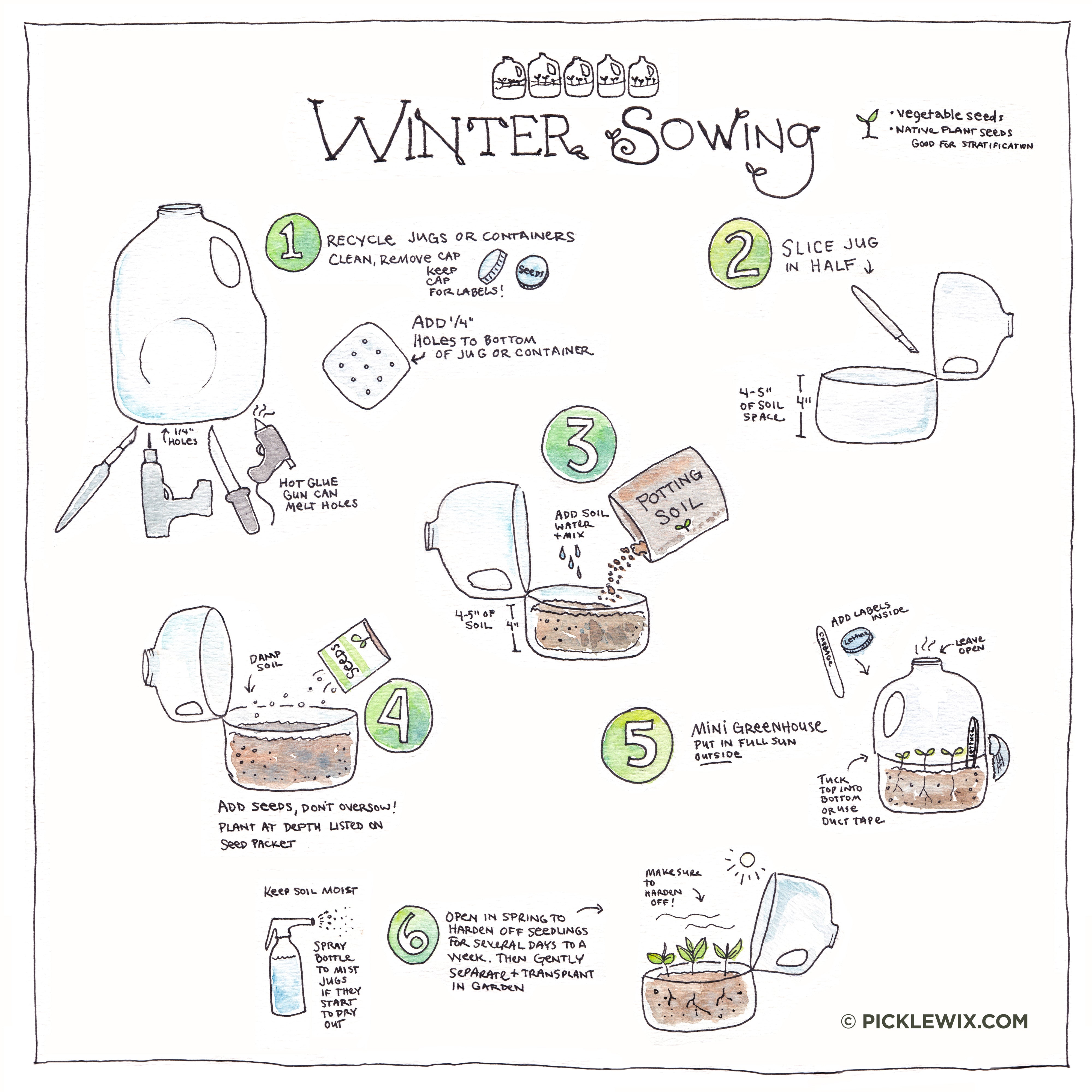
Learn more about different options for growing year round in Hoop Houses, Cold Frames, or using the Winter Sowing method: Here's a great in-depth article called Colorado Cold Frames written by our Website Designer & Blog Post writer, Idelle of Picklewix.com. She is an avid gardener and took the photos in this post (and many of the photos on our website and blog!)
Happy growing!