|
|
 |
|
|
 |
 |
|
Tabasco Capsicum frutescens (81 days) Plants are 2’-4’ tall and are loaded with slender 1.5” pods that grow upright. Chiles mature from a yellow-green to bright red. Easy to grow and vigorous. When fresh they taste just like the famous sauce. Tabasco sauce is the famous hot sauce that has been produced in southern Louisiana since 1848.
~ Tabasco peppers are picked by hand as soon as they ripen to the perfect shade of bright red. They are mashed, mixed with a small amount of Avery Island salt, placed in white oak wooden barrels, and allowed to ferment and age for up to three years. ~ Fully aged mash is then blended with all natural, high grain vinegar and stirred. Four weeks later, the pepper skins and seeds are strained out, and the finished sauce is then bottled.
Start seeds indoors 6 weeks prior to soil warming to 55°F Transplant seedlings into rich well-draining soil 24” apart. Seeds can also be planted directly outside after soil warms. Harvest chiles when they are bright red. Use fresh or make hot sauce. Heat Level:Very Very Hot ~ Scoville 30000-50000 ~ Packet contains 10 seeds
|
|
 |
|
|
 |
|
|
 |
 |
|
Cayenne Ring-o-Fire Capsicum annuum (60 days) These pencil-thin Cayenne-type peppers are 4 inches long and mature from green to red approximately 60 days after transplanting. Plants are relatively short but yield heavy, concentrated sets of fiery pepper. A good choice for short season gardeners. Cayenne peppers are easy to cultivate and happily grow in a wide variety of locations.
~ One of the most popular peppers for adding heat to dishes because it adds heat without adding any distinct flavors that might conflict with flavors in a dish. ~ Cayenne peppers are used fresh in hot sauces, and dried or ground for cayenne pepper or pepper flakes.
Start seeds indoors 6 weeks prior to soil warming to 55°F. Then transplant seedlings into soil 12” apart. Seeds can also be planted directly into thegarden and covered with 1/4” of soil. Harvest the peppers when they turn from green to red.
Heat level:Very Very Hot ~ Scoville 30000-50000~ Packet contains 10 seeds
|
|
 |
|
|
 |
|
|
 |
 |
|
Thai Hot Pepper Capsicum frutescens (90 days) Small 18” plants become covered with thin skinned 1 -1/2" long peppers that are green at first and then ripen to red. Both colors appear on the plant at the same time making this variety ornamental as well as edible. Thai chile peppers (Prik ki nu) are also known as birdseye chile peppers.
~ Thai Hot peppers measure 50,000 -100,000 Scoville units making them one of the hottest peppers on the planet.
~ Thai Hot peppers are incredibly hot and spicy and give the Asian bicol express dish its fiery zing. This pepper is a perennial and will produce pods for several years when it is protected from frost.
Start seeds indoors 6 weeks prior to soil warming to 55°F. Transplant seedlings into rich well-draining soil 18” apart. This chile also grows well in containers and hanging baskets. Harvest chiles when they are red. They can be used fresh or dried.
Heat Level: Very Very Very Extra Hot! ~ Scoville 50000-100000 ~ Packet contains 10 seeds-
|
|
 |
|
|
 |
|
|
 |
 |
|
Chile Tepin, also known as Chiltepin Capsicum annuum Tiny 3/8” fruits grow on plants that are 3’ tall and 3’ wide. The first year plants require 120 days for green fruit and 200 days from the setting out of plants to mature red ripe fruit. Tepin peppers, nicknamed “bird’s eye” peppers, rank high in heat level at 100,000+ scoville.
~ Called the "mother of all peppers". It is thought to be the oldest form in the C. annuum species. This chile has a long history, the word Tepin is from the Nahuatl language of the Aztec Indians. meaning ‘flea’ because of its smallness.
~ In Mexico, the heat of the Chiltepin is called arrebatado ("rapid” or “violent”), which implies that although the heat is intense, it quickly diminishes.
Plant seeds on a tray of sterile media and cover 1/4” deep. Provide 85°F bottom heat and keep moist. Being a wild plant, seeds can take 3-5 weeks to germinate. Best grown in containers year-round and brought indoors over-winter in areas that have frost. The second year when plants are put outdoors the next spring they start flowering quickly, and start producing fruit July to Oct.
Heat level: Very Very Very Extra Hot ~ Scoville 75000-265000 ~ Packet contains 10 seeds
|
|
 |
|
|
 |
|
|
 |
 |
|
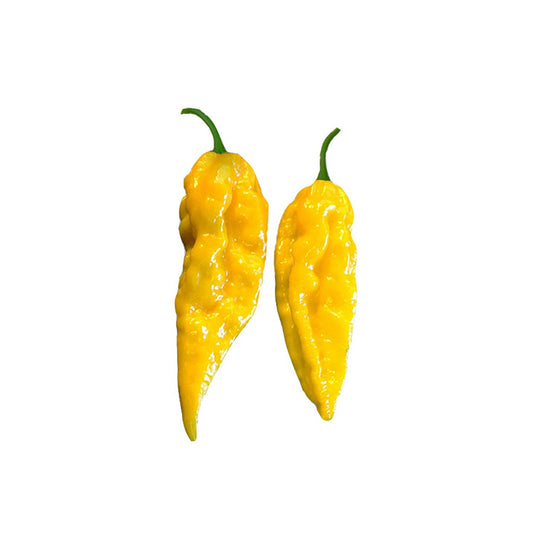
Fatalii – Capsicum chinense (100 days) Extremely hot fruits are 3” long and grow on 24” tall plants. The peppers matures quickly from a pale green to a very bright yellow. Great for container gardening.
The Fatalii pepper is in the Capsicum Chinese species alongside the Habaneros. The Chinese species is native to Central America, the Caribbean, and the Yucatan regions. The Fatalii however is special and native to Central and South Africa instead. This wonderful pepper evolved from the peppers that returning slaves brought back to their homeland.
Seeds can be started indoors 4 to 6 weeks before your last average frost date. Transplant outside 30” apart when the soil is warm. Grow in full sun and fertile soil with good drainage. Harvest peppers when they are yellow. If water is limited the last weeks before harvest, the peppers will become hotter.
Heat level: Very, very, very, extra hot. ~ Scoville 300,000 ~ Packet contains 10 seeds.
|
|
 |
|
|
 |
|
|
 |
 |
|
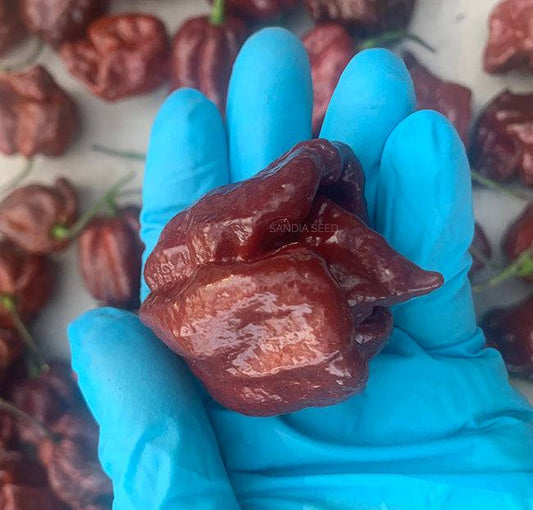
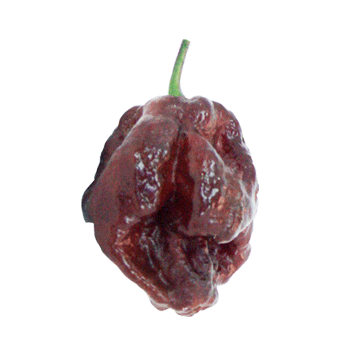
Chocolate Habanero Capsicum chinense (110 days) This chile is glossy chestnut brown and 1-1/2” wide x 2” long. Harvest when it turns a chocolaty brown. Produces high yields. Habanero means from Havana and this extremely hot pepper is believed to originally been from Cuba and taken to the Yucatan Peninsula.
Scoville units are used to rate the heat of peppers. The Scoville unit was named after Wilbur L. Scoville in 1912, His test consisted of a panel of tasters who would systematically taste a solution of chile extract and slightly sweetened water for detectable heat. They would determine how much the chile extract needed to be diluted before it no longer had a detectable heat sensation.
Plant seeds on a tray of sterile media and cover 1/4” deep. Provide 85°F bottom heat and keep moist. Seeds can take 3-5 weeks or longer to germinate. Transplant after plants have their first two true leaves and when night temperatures are above 60°F. Heat level: Very Very Very Extra Hot. ~ Scoville 325000-425000 ~ Packet contains 10 seeds
|
|
 |
|
|
 |
|
|
 |
 |
|
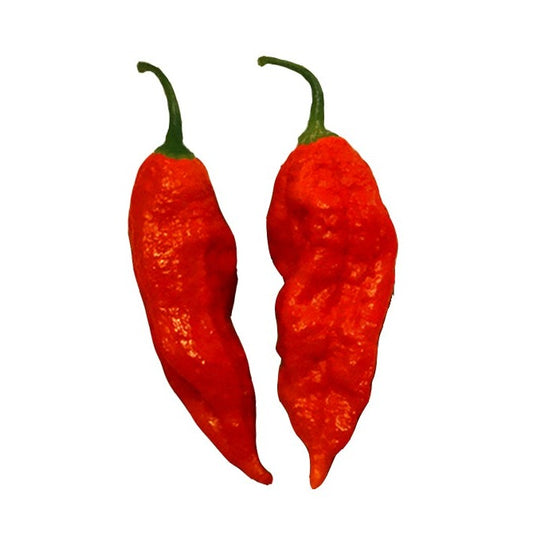
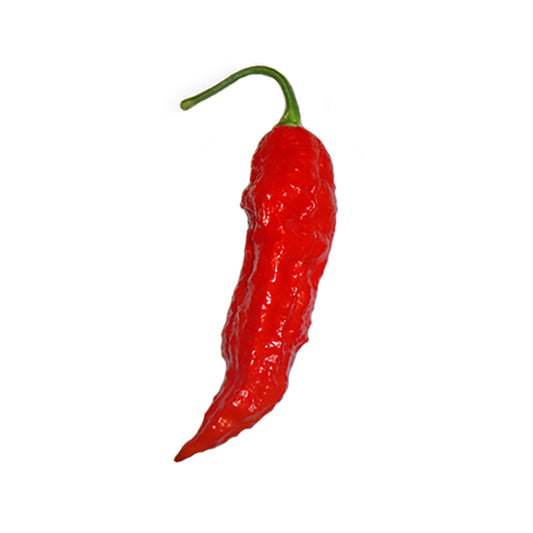
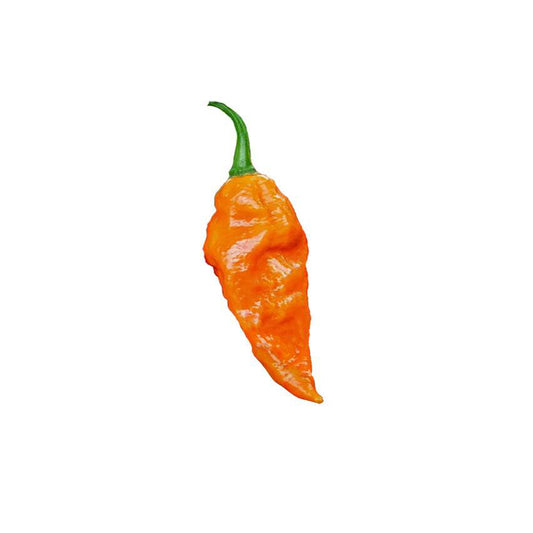
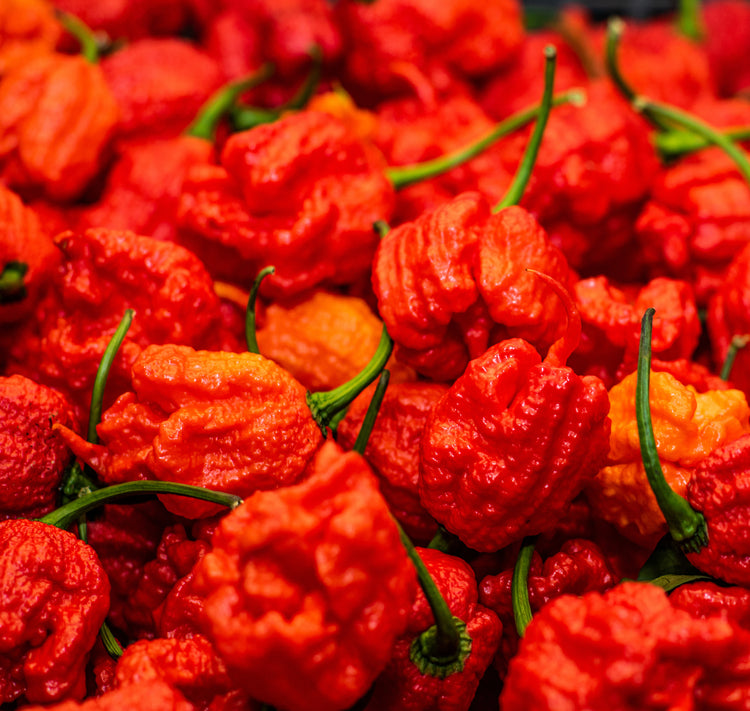
Bhut Jolokia, Ghost Chile, Naga Jolokia, Ghost Pepper, and Naga Morich Capsicum chinense/C.frutescens (140 days) The 3” long and 1” wide pods turn from green to red at full maturity with rough dented skin. Warning: Handle with extreme caution and use hand, eye and breathing protection. The world’s hottest pepper at over 1,000,000 scoville units. High humidity will increase its heat.
~ This pepper originates from Nagaland in north-eastern India, and was named by the Naga peopleafter the most venomous snake in the region. ~ The Assamese word jolokia means the Capsicum pepper, and the word naga means "King Cobra" in Sanskrit. ~ The pepper's fierce “bite” is akin to the venom of a king cobra.
Start seeds indoors 10 weeks prior to warm spring temp. Plant seeds on tray in sterile media and cover 1/4” deep. Provide 85°F bottom heat and keep moist. Seeds germinate in 35 days. Transplant seedlings into pots, then into large containers or directly into rich soil, 24” apart. Harvest chiles when they are red.
Heat Level: Way Too Hot! ~ Scoville 825000-1000000 ~ Packet contains 10 seeds
|
|
 |
|
|
 |
|
|
 |
 |
|
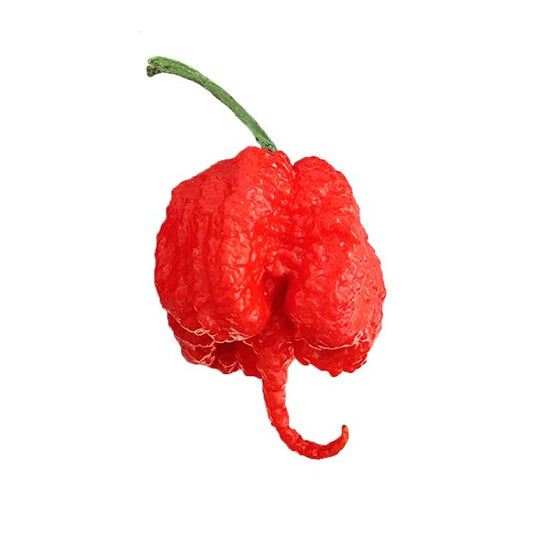
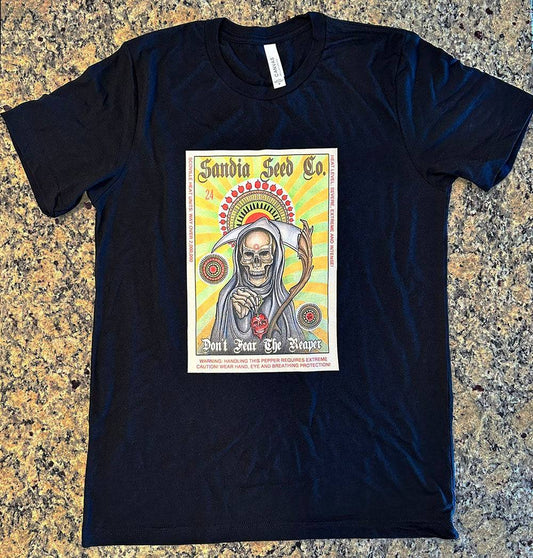
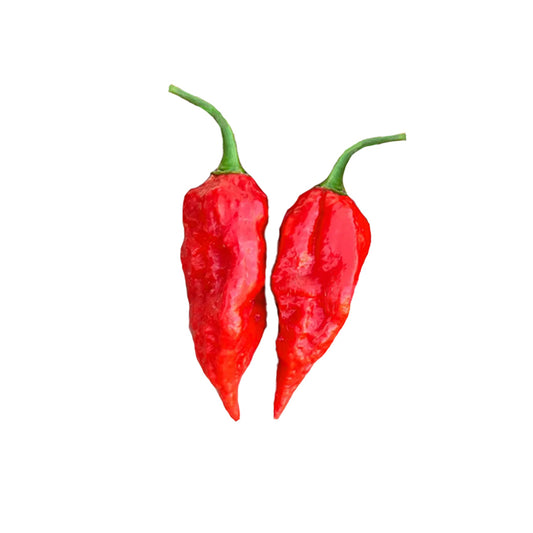
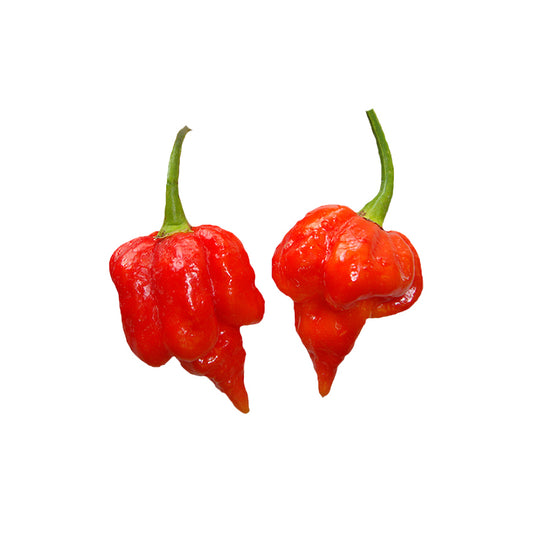
Trinidad Scorpion - Capsicum chinense (120 days) This pepper currently holds the title of World's Hottest Pepper! Pods are 2” long and 2-1/2” wide with a distinctive tail. Matures from green to yellow to red. Trinidad Scorpion has a unique fruity sweet-hot combination, with delayed severe heat. Once the heat comes along it never stops.
~ Packet contains 10 seedsWarning: Handling this pepper requires extreme caution. Wear hand, eye and breathing protection.
Heat Level: Extreme, Severe, and Intense. Scoville Units: >1,400,000 ~ Packet contains 10 seeds
|
|
 |
|
|
 |
|
|
 |
 |
|
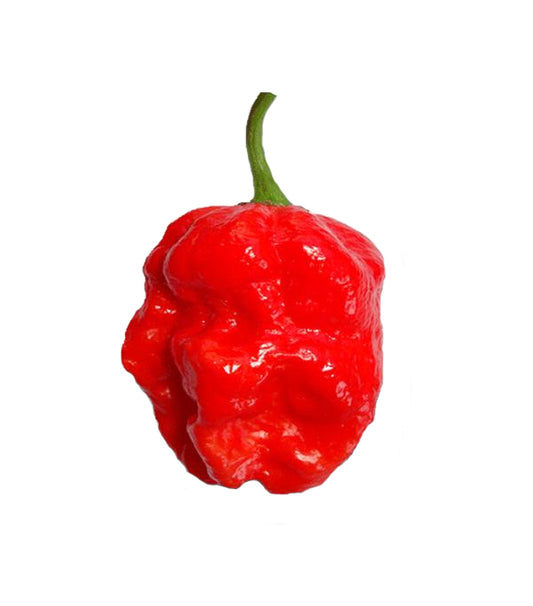
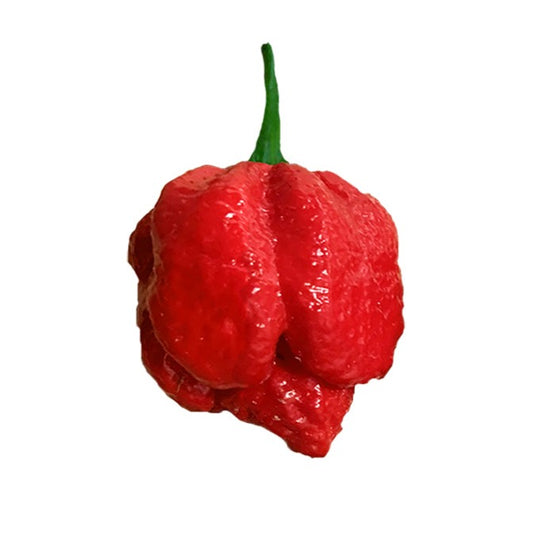
7 Pot / 7 Pod - Capsicum chinense (110 days) Pods are 2” long and 1-1/2” wide with a bumpy red skin. Matures from green to red and is way too hot to actually taste. Plants are 24-30” tall. 7-Pot is an extremely rare chile with some serious heat. Descriptions after eating it include ‘hot lava on my throat’ or ‘tongue melting’. The 7-Pot could easily be the next hottest chile in the world! Gets its name from being so hot that it can heat up seven pots of stew. One pod for the whole week for the whole family!
Warning: Handling this pepper requires extreme caution. Wear hand, eye and breathing protection.
Heat Level: Extreme, Severe, and Intense. Scoville Units: >1,300,000 ~ Packet contains 10 seeds
|
|
 |
|
|
 |
|
|
 |
 |
|
Peruvian White Lightning Habanero - Capsicum chinense (90 days) Creamy white pods are lantern shaped and measure 1-1/2” long and 3/4” wide. The small 24” tall bushy plants are high yielding. One plant can produce hundreds of tiny fruits. White habaneros grow quickly and in great numbers. One pepper is the perfect size to chop up into a sandwich, or any meal, to really give it a kick.
Heat Level: Very, Very, Extra Hot. Scoville Units: 400,000 ~ Packet contains 10 seeds
|
|
 |
|
|
 |
|
|
 |
 |
|
Pequín / Piquín - Capsicum annuum (100 days) Plants are 4’ tall and loaded with 1/2” oval shaped chiles that grow upright. Matures from green to red and has a very complex and nutty flavor. Bears fruit almost all year long in mild winter temperatures. This pepper is native and grows wild in Texas and New Mexico. It is affectionately known as 'bird pepper' because they will grow anywhere the birds have deposited them. Especially mockingbirds. Also known as turkey pepper, chilipiquin and even cayenne in the local areas where it grows wild.
Heat Level: Very, Very, Extra Hot. Scoville Units: 50,000-100,000 ~ Packet contains 10 seeds
|
|
|
|
|
|