headerlogo


contact-icon  Contact  Me

site-map-icon  Mail/Fax Order
visamc1
Paypal


veggies

ChimayoFront
Enter Quantity:  


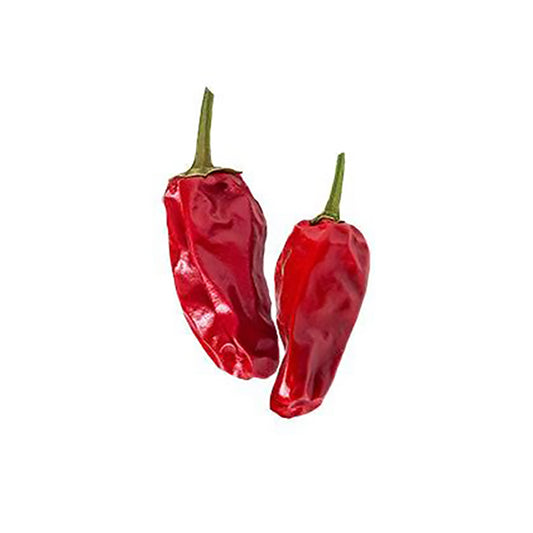
Chimayó Capsicum annuum (75) days to maturity. Chimayó chiles are unpredictable. A single plant might produce some chiles as long as six or seven inches and many more that are shorter; a few might be straight and skinny, and some will be bent oddly into curlicues. Delicious flavor. Chimayó chiles make great red chile sauce. It tastes sweet and then hot.

~ A ‘landrace’ is a variety of chile that has been grown for many generations (and in some cases, hundreds of years) in the same location, and has adapted to that location.
~ This open-pollinated chile will cross-pollinate with any other variety of Capsicum annuum. This has led to problems in preserving the unique genetic landrace identity of the Chimayó.

Start seeds indoors 6 weeks prior to transplanting outside. Grows best when night temps are above 60 °F. Soil needs to be well-draining, and keep on the dry side when the fruit has formed. Harvest chiles when they are green and firm or leave on the plant until they turn red.

Heat Level: Hot ~ Scoville 4000 - 6000 ~ Packet contains 30 seeds

RamHornfront
Enter Quantity:  


Ram Horn – Fireboy - Capsicum annuum (75 days) Very hot, long 7” peppers grow in the shape of a ram’s horn on 30” tall plants. The heavy sets of fruits will mature from bright green to red. Delicious in both colors. This heirloom variety is used mainly for canning of whole pods without removing the seeds. They are preserved in a pickle vinegar and are always a popular snack during hot summer barbecuing.

Heat Level: Very, Very Hot. Scoville Units: 35,000
~ Packet contains 30 seeds

BarkerFront1
Enter Quantity:  


NuMex Barker’s Hot Capsicum annuum (75 days) Very productive 24 - 36” plants produce pungent 5” pods with smooth skin. Pods dry well.

Did you know can make your chiles even hotter?
1.) Select a hot variety like NuMex Barker’s X-Hot.
2.) Peppers cultivated in a hot climate with days in the 95ºF range are spicier than those grown where days are in the 70ºs. If you live in a cooler climate, grow peppers in containers on concrete in full sun.
3.) Drought-stricken chiles are hotter than those grown with ample water and keep nitrogen fertilizer to a minimum. If you prefer milder peppers, keep the plants well watered and provide afternoon shade.

Start seeds indoors 6 weeks prior to soil warming to 55°F. Then transplant seedlings into rich well-draining soil 24” apart. This variety can easily be grown in containers. Harvest chiles when green and firm or leave on the plant until they turn red.

Heat level: Very Hot ~ Scoville 5000 - 7000 ~ Packet contains 30 seeds

LumbreFront1
Enter Quantity:  


Lumbre XX Hot – Capsicum annuum (80 days) This is the hottest New Mexico green chile available! It is sold in fresh markets as Hatch Double-X Hot in the late summer. Pods are small at 5” , but don't be fooled, they are screaming hot. Plants grow to 30” tall.

This chile is really good when a few pods are added to a batch of mild or medium green chile. Lumbre is always great to have on hand when someone really likes their chile hot. The burning sensation from chile is caused by a molecule called capsaicin. When capsaicin hits your tongue it sends pain signals to your brain. Then the brain sends out endorphins to soothe the pain.

Sow seeds outside 2 weeks after the last average frost when the soil is warm. Plant them 1/4” deep, and thin to 30” apart. Grow in full sun and well draining soil. Water and fertilize regularly. Harvest chiles when they are full size and green.

Heat level: Extra hot. ~ Scoville 9,000 – 10,000
 ~ Packet contains 30 seeds.

EarlyJalapenoFront
Enter Quantity:  


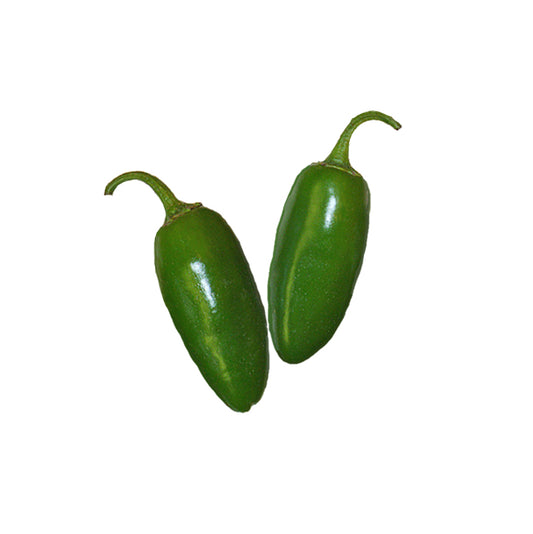
Early Jalapeño - Capsicum annuum (65 days) Matures early and produces an abundant crop over the entire season. Plants are 24” tall and pods are 3” long x 1” wide. They have thick flesh and dry well when smoked. The popular Chipotle is made from mature red jalapeños that are smoke-dried over wood. The most common chipotle, is named 'morita' and means "little blackberry" in Spanish. It is dark red and remains pliable after smoking. Grows well in cool temperatures and in containers. 

Heat Level: Hot ~ Scoville 7000 – 9000 ~ Packet contains 30 seeds

SandiaHot1a1
Enter Quantity:  


Sandia Hot Capsicum annuum (75 days) Chiles mature early and produce well in high temperatures. Plants are 24” - 36” tall and the 7” pods have medium thick walls making them ideal for both fresh and roasted chiles. Throughout New Mexico, green chiles are allowed to ripen to red on the vine and made into ristras or strings.

~ While chiles are still fresh and flexible, several are tied together at the stem and then fastened in clusters on a string measuring from one to six feet in length.
 ~ Traditionally, ristras are hung to dry in a place of good air circulation, often outdoors under the eaves of a house.

Start seeds indoors 6 weeks prior to soil warming to 55°F. Then transplant seedlings into rich well-draining soil 24” apart. Seeds can also be planted directly into the garden when the soil warms. Harvest chiles when they are green and firm or leave on plant until they turn red.
 
Heat Level: Very Hot ~ Scoville 7000 – 9000 ~ Packet contains 30 seeds
 

SerranoTampiquenoFront
Enter Quantity:  


Serrano Tampiqueño - Capsicum annuum (78 days) Plant produces heavy yields of small 2 ¼" long by ½" wide hot peppers. Plants are 24” tall and wide. Peppers turn from green to bright red as they mature. This heirloom has a distinctive and unique hot flavor. It is crisp, bright, and biting, and notably hotter than the jalapeño it resembles.

Serranos are typically eaten raw, so no need to roast or peel. Always popular in pico de gallo, salsas, and soups. A little pepper with a big kick!

Heat Level: Very Hot. Scoville Units: 15,000 - 25,000
~ Packet contains 30 seeds

Bolivian

Sold Out

Bolivian Rainbow Chile Capiscum frutescens (90 days) Everbearing 24” -36” tall plants have purple foliage and purple flowers yielding ¾" long by ½" wide hot peppers. Great container plant. Very prolific.
.
~ A beautiful edible ornamental pepper plant with all color stages on the plant at the same time.

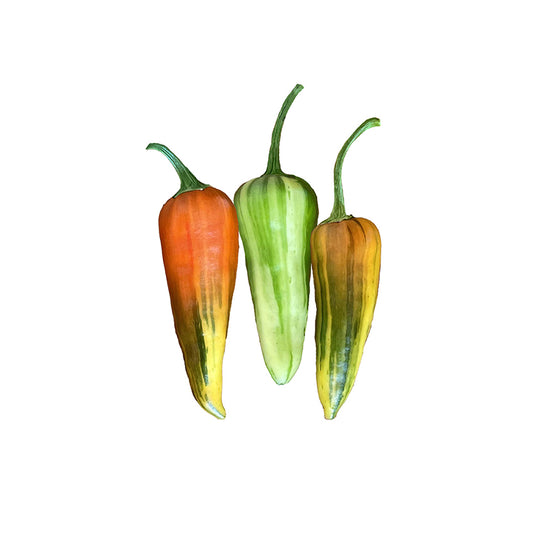
~ Grown for centuries in Bolivia, this searingly hot pepper turns from brilliant purple to yellow and then to red when ripe. Unique, bright landscape plant bears early and throughout the entire season. 

~ Sow seeds indoors 6-8 weeks before the last spring frost. Germinates at 70 - 90°F. Transplant when soils are warm, spacing seedlings 12-18” apart. Enrich soil with mature compost. Needs warm conditions day and night to germinate and fruit well. Chiles are ripe when they become red.

Heat level: Super Hot ~ Scoville 10000-30000 ~ Packet contains 10 seeds
 

De Arbol1
Enter Quantity:  


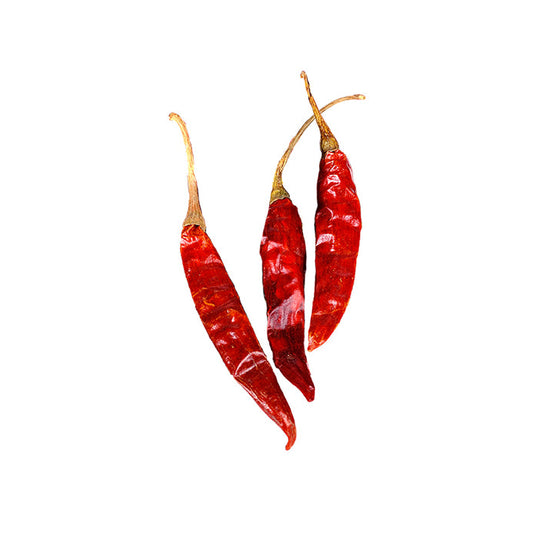
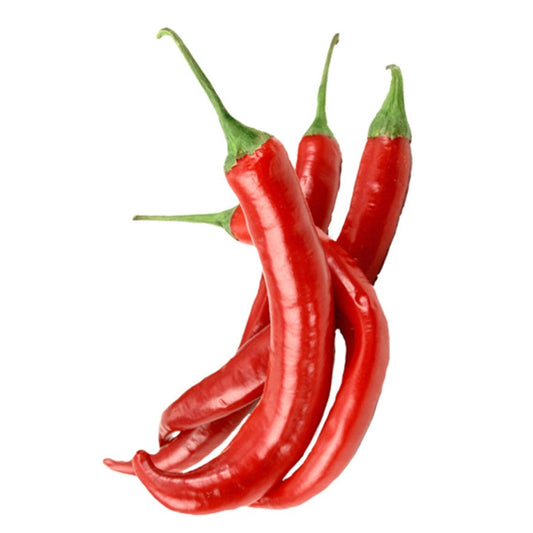
Chile de Arbol Capsicum annuum  (90 days) Narrow pendant shaped fruits grow to 3” in length and mature from light green to dark red with a woody stem. De arbol means "tree like". These chiles grow on large plants with thick woody branches that can grow quickly; as much as 4 feet in a year!

~ Popular in western Mexico, de arbol chiles are thought to have originated in Oaxaca and Jalisco.
~ Sometimes referred to as "bird beak" or "rat tail" because their distinctive shape is easy to recognize.
 ~ All peppers are perennials, but they are usually grown as annuals. This variety can be brought indoors during the cold winter months. It may de-foliate from the initial stress of being moved, and then it will quickly releaf and be ready for next spring outside.

Start seeds indoors 6 weeks prior to soil warming to 55°F. Then transplant seedlings into large containers or directly into rich well-draining soil 36” apart. Harvest chiles when they are red and firm.

Heat level: Super Hot ~ Scoville 15000-30000 ~ Packet contains 10 seeds

Jwala
Enter Quantity:  


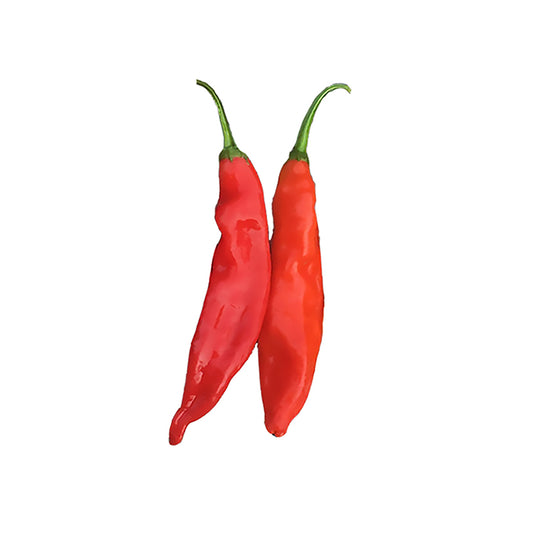
India Jwala- Finger Hot Indian Pepper (100 days) Capsicum annuum Large 36” tall plants are covered with white flowers that turn into a large crop of extremely pungent peppers. The 4” long pods have light green thin wrinkled skin that will turn to orange and then red at maturity.

~ Jwala means "Volcano" in Hindi and these peppers are found in Kheda and Mehsana in Gujarat. This variety has wide adaptability and is easy to grow in containers or in the garden. It will produce at least 50 peppers per plant. The long, slender fruit are wrinkled, and about as long as a finger. This variety is extra-hot, and very popular in its native India, where it is used in much of India’s flavorful food.

Start seeds indoors 8 weeks prior to spring temperatures above 60°F. Plant seeds on trays in seedling mix and cover 1/4” deep. Provide 85°F bottom heat and keep moist. Seeds germinate in 2-4 weeks. Transplant seedlings 36” apart into rich well -draining soil, Harvest chiles when they are green or red. Use when fresh or dried.

Heat Level: Super Hot ~ Scoville 20000-30000 ~ Packet contains 10 seeds

BulgarianCarrotFront
Enter Quantity:  


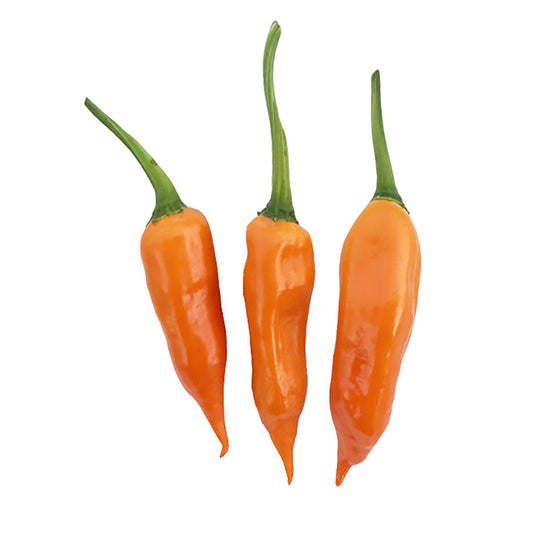
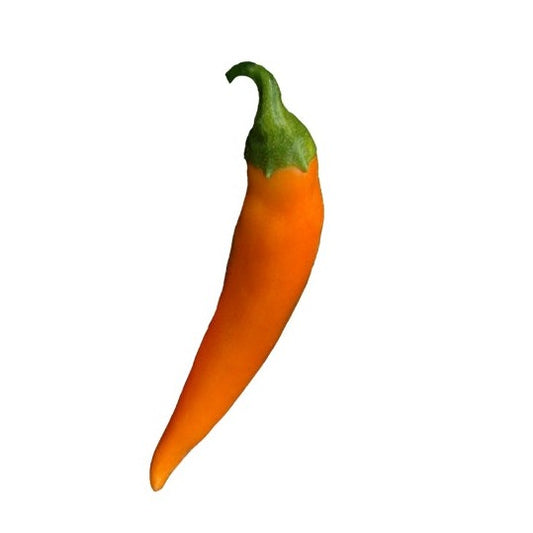
Bulgarian Carrot or Shipska - Capsicum annuum (75 days) Bright orange 3" long peppers are very hot with fruity flavor. The small 18” plants get completely covered with fruit. Shipska was smuggled out of Bulgaria to America in the 1970's when the “Iron Curtain” was still existent. This superb variety is very well adapted to the cool Scandinavian climate. Great for cool season gardens and containers.

Heat Level: Very Hot. Scoville Units: 12,000
 ~ Packet contains 10 seeds

JalmundoFront
Enter Quantity:  


NuMex Jalmundo - Capsicum annuum (78 days) A new jalapeño variety. Plants produce heavy yields of large meaty pods up to 5” long and 2-1/2“ wide. Plants are 30” tall. Peppers turn from green to red as they mature. This is the ideal jalapeño for America's growing demand for a larger, cheese-stuffed, deep-fried pepper with more heat. The name Jalmundo is a contraction of jalapeño and the Spanish word for world (mundo), implying big as the world. Easy to grow, and great for containers.

Heat Level: Very Hot. Scoville Units: 17,000
 ~ Packet contains 30 seeds

Mail Order Form

Please read the terms page before ordering


Website design by

shydesnew2d
Back to Top