People have asked, can peppers survive 40˚ F temperatures?

Yes, pepper plants can SURVIVE 40˚ F temperatures, but they won't be happy about it and it will likely stunt their growth. Most peppers are not happy when temperatures drop below 50-60˚ F. They will survive, but they most certainly will not thrive if kept too long in cool temps!
If you live in a short season climate, we recommend starting pepper seeds indoors 6-8 weeks before the last frost of the spring is expected, and wait to transplant outside until it's warmed up to at least 55-60˚ F at night consistently and all chance of frost has passed.
Planting peppers outside early in the spring with no protection and cold weather below 50˚ F can stunt the plants' growth, postponing and decreasing the season's harvests!
So keep pepper plants cozy indoors until it warms up in the spring, or, you could also protect them with hoop houses, greenhouses, water walls, or other season extenders to keep them warm if spring temperatures get cooler than 50-60˚ F at night.
What should you do with the your peppers that are already planted in the garden and an unexpected cold front is passing through in the spring?
Pepper plants do not tolerate frost, especially young seedlings. Even cool temperatures around or below 40-50˚ F can stunt pepper seedlings. They will survive if it doesn't freeze, but they most certainly will not thrive if kept too long in cool temps! If you planted a little too early, or, if an unexpected late frost is heading your way, it's best to cover your seedlings to trap the heat in and keep them cozy until the cold front passes.

If your pepper seedlings are already planted in the garden and a spring cold spell is expected, we recommend covering your peppers as soon as possible with an overturned container or pot (thicker clay pots can provide more insulation), or use garden water walls, or put up a support such as hoops and cover with frost cloth or greenhouse film to keep them warm. These can trap the heat in and protect your cold-sensitive plants. Make sure no plastic or cloth is touching the seedlings. Remove the cover once temperatures have warmed up over 45-50˚ F.
Note: if the temperature drops below freezing for too long, these methods may not save your pepper seedlings. This is why it's important to wait to transplant peppers into the ground until after it's warmed up to 50˚-60˚ F at night regularly and all chance of frost has passed in your growing region. That said, once they are in the ground, covering is your next best chance of keeping them happy, since the weather can be unpredictable and late frosts can be common in many regions.
Growing Peppers and Winter is Approaching?
If you're trying to squeeze a few more days/weeks out of your pepper harvest and the temperatures are dropping at or below 40˚ F, we recommend covering your peppers with an overturned container, or frost cloth or a small hoop house with greenhouse film to keep them warm during the cold nights if you can to help them keep producing. If using frost cloth or greenhouse film, prevent plant damage by making sure to keep the covering from touching the plants with some sort of structure such as a cage or PVC or metal conduit hoops. Once peppers get cold, they won't be producing many more peppers, but you can try to ripen peppers on the plants a little longer with a little extra cover. :) If you grow peppers in containers, you can move them to a warm, sheltered location on cold nights or during early cold weather until it has passed to extend the season!
We have a ton more tips for starting pepper seeds, and growing healthy organic pepper plants. Learn more about How to Grow Peppers »
Cooler Weather Peppers
There are a few peppers that don't mind cooler temperatures (but NOT freezing):
#1 Cool Weather Pepper:
A great cool weather tolerant pepper is the Bulgarian Carrot.

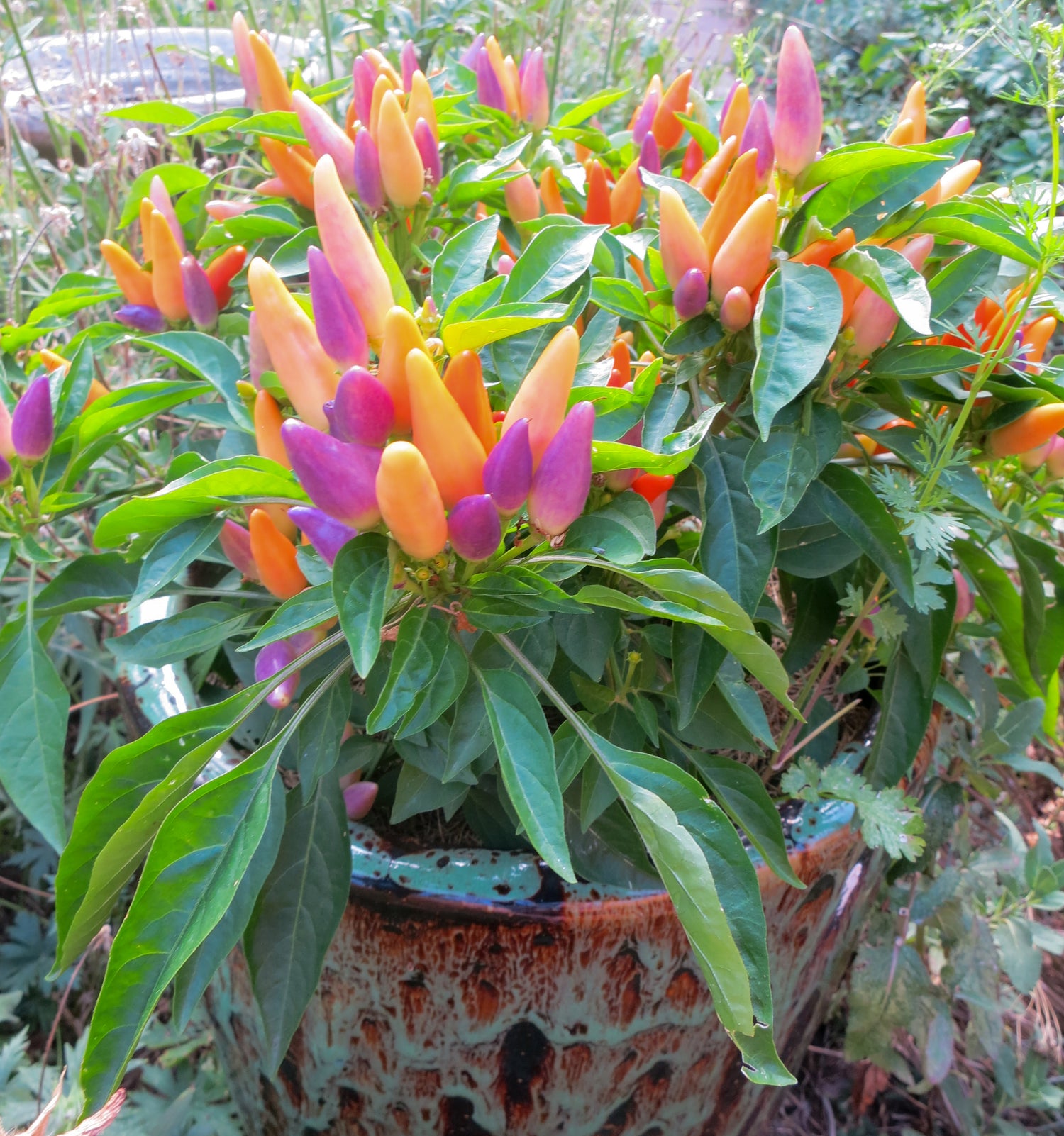
Bulgarian Carrot
This variety came to America in the 1970's from Bulgaria and is well adapted to the cool Scandinavian climate. They set fruit best between 65-85°F, so 40˚ F would be a little cold from them, but they would likely survive better than most peppers.
The Bulgarian Carrot Chile pepper plant itself is adapted to cooler northern climates and grows well even in a cooler summer.
These orange peppers are great for containers and easy to grow. You could keep these in a container, and leave them out in the autumn and they will continue to thrive – especially if you bring them inside during any frosts! You could even grow them indoors over the winter if you have a bright sunny spot.
It's easy to see how this heirloom pepper got its name.The long tapered orange fruits might fool one into thinking it is a sweet carrot, but that is not the case at over 12,000 Scoville Heat Units!
Bright orange 3" long peppers are very hot with fruity flavor. The small 18" plants become completely covered with fruit and are quite charming in pots!
#2 Cool Weather Pepper:
Another cooler-weather option for peppers is the FASTEST growing pepper we have in our collection, the delicious sweet Chocolate Bell Pepper

Sweet Chocolate Bell Pepper
A chocolate-colored bell pepper with a very sweet flavor. It ripens from green to dark brown on the outside and brick red flesh on the inside. This is our earliest pepper to harvest, with the first peppers ripening at around 57 days.
You get loads of 3-4” sweet bell peppers on this pepper plant that tolerates cool nights better than most other peppers.
We'd say keep them warmer than 40 degrees if possible, but they would likely survive better than other peppers if it were to dip that low at night.
This is the fastest growing pepper so we think every garden should have one so you can enjoy the crunchy sweetness of these Chocolate Bell peppers earlier in the season!
This early bell pepper was bred by Elwyn Meader and introduced by the University of New Hampshire Agricultural Experiment Station in 1965. The chocolate color skin and the red flesh are beautiful raw in salads and roasted in other dishes.

Is overnight temperatures of 45˚F safe for pepper seedlings?
We're getting some nights here and there of around 45 degrees here in Wisconsin this week… is it worth bringing my pepper plants inside when this happens? Or will they be ok for a couple nights here and there? My understanding is that nights are supposed to be at least 50 degrees and ideally closer to 60/70˚F.

If they are already planted, or if you don't want to bring them back inside, you can alternatively provide them with some cover for heat retention at night. For example, you could cover them with overturned containers such as storage bins or large pots to keep them warmer overnight if you don't want to bring them inside. You could also use hoop houses with frost cloth/greenhouse film, or those water walls.

As we mentioned above, there are a few varieties of peppers including the Bulgarian Carrot and the Sweet Chocolate Bell Pepper, that can tolerate cool nights better than other peppers, but it's ideal to keep them a little warmer than 40˚ F to keep them happy. Peppers are warm-weather loving creatures!